
Is PANDY AI Plush Toy Scam or Legit Product? Does Pandy Really Act Like Real Panda?

Author: De-Reviews.com Team
The PANDY AI Plush Toy has been attracting people’s attention online, especially among those who are fans of cute and interactive toys. It is sold with different names such as Pandy Lifelike Panda Toy With AI Motion Sensors, PANDY-An Incredibly Soft Panda That Instantly Calms You Down, and Pandy The Realistic Panda Toy. The advertisements of this plush toy make it look like a magical, lifelike panda that can move, interact, and respond to its surroundings. Anyone who loves pandas or wants the same kind of toy would find this idea very tempting. But the big question: is it really worth buying? Let’s find out.
Advertisements Vs Reality:
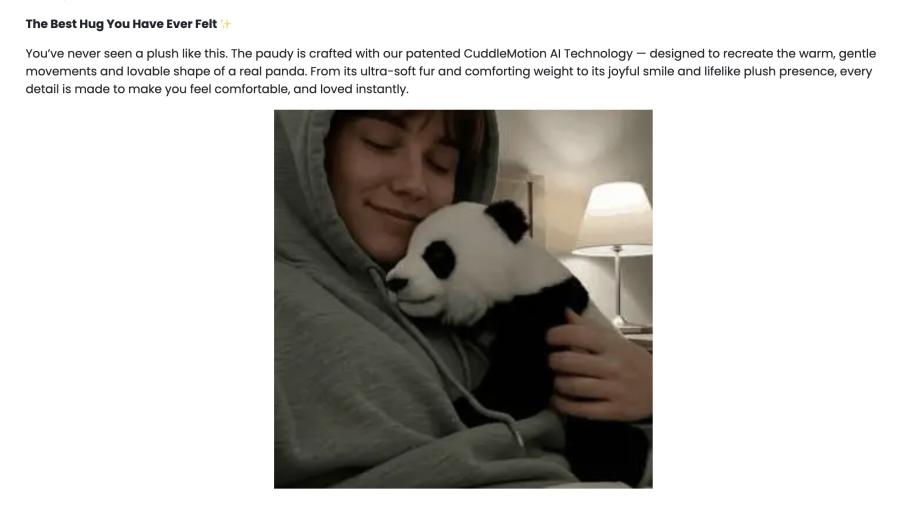
One of the most attractive things about PANDY AI Plush Toy’s ads is how lifelike the toy looks. The videos show it walking, turning its head, and reacting to movements, almost like a real panda. This makes buyers excited and imagine having their very own tiny panda at home.
However, many buyers say their experience was very different. Instead of an interactive, moving panda, they received a regular stuffed toy that doesn’t move or respond at all, or move like a normal toy. As per the customers complaints, they said the toy looks nothing like what was shown in the ads, proving that it likely won’t give the lifelike experience as promised in those ads.
Warning Signs on Websites Selling PANDY AI Plush Toy include:
- Many of them offer huge discounts to lure buyers in, a tactic often used by scam sites.
- No links to official social media pages.
- Copied and pasted content that appears on multiple other websites.
- Basic or poorly designed website layouts.
These warning signs mean buyers should be careful while buying this product. Even if a website looks official, these red flags usually point to products that don’t live up to the hype falsely created.

Unrealistic Technical Claims:
The PANDY AI Plush Toy claims to have motion sensors and AI capabilities that make it act like a real panda. In reality, a toy that can move, react, and interact like a real Panda would require:
- Advanced environmental sensors.
- Complex machine learning software.
- Powerful onboard processors.
Considering the low price of PANDY AI Plush Toy and the lack of any technical specifications, it is highly unlikely that the toy works as described. The features advertised are far more advanced than what a small, cheap stuffed toy could actually do.
Buyers’ Experiences with Similar Products:
PANDY AI Plush Toy’s marketing is similar to other AI plush toys that have frustrated buyers, such as:
- Koaly AI Plush Koala
- Realistic AI Puppy
- Lifelike AI Penguin
- Wuffy Robot Puppy
These toys also promised to be interactive, but mostly turned out to be ordinary stuffed toys. Many buyers felt disappointed, and PANDY AI Plush Toy seems to follow the same pattern.
Customer Reviews and Complaints:
Even when sold on major e-commerce platforms like Amazon, the toy has received lots of complaints. Some of the most common complaints include:
- Product looks nothing like the advertisement.
- Toy has no movement or AI features, or only few basic moments like normal toy have.
- Quality of materials is poor.
These experiences suggest that the PANDY AI Plush Toy may not live up to the hype, and potential buyers should be careful before making a purchase.
The Truth:
Even though the ads make it look amazing, the PANDY AI Plush Toy doesn’t really act like a real panda. Most buyers end up with a regular stuffed toy that looks very different from the interactive version shown online. The AI features are mostly marketing tricks, and it’s unlikely that the toy provides the lifelike experience as promised.
In short, while it may be cute, the PANDY AI Plush Toy is not the smart, interactive panda it claims to be. If you’re considering buying it, be aware that you may just get a regular plush toy and not the magical experience shown in the advertisements.
Report a Scam!

Have you fallen for a hoax, bought a fake product? Report the site and warn others!
Scam Categories
Help & Info
Top Safety Picks
Your Go-To Tools for Online Safety
- ScamAdviser App - iOS : Your personal scam detector, on the go! Check website safety, report scams, and get instant alerts. Available on iOS
- ScamAdviser App - Android : Your personal scam detector, on the go! Check website safety, report scams, and get instant alerts. Available on Android.
- NordVPN : NordVPN keeps your connection private and secure whether you are at home, traveling, or streaming from another country. It protects your data, blocks unwanted ads and trackers, and helps you access your paid subscriptions anywhere. Try it Today!
Popular Stories
As the influence of the internet rises, so does the prevalence of online scams. There are fraudsters making all kinds of claims to trap victims online - from fake investment opportunities to online stores - and the internet allows them to operate from any part of the world with anonymity. The ability to spot online scams is an important skill to have as the virtual world is increasingly becoming a part of every facet of our lives. The below tips will help you identify the signs which can indicate that a website could be a scam. Common Sense: Too Good To Be True When looking for goods online, a great deal can be very enticing. A Gucci bag or a new iPhone for half the price? Who wouldn’t want to grab such a deal? Scammers know this too and try to take advantage of the fact. If an online deal looks too good to be true, think twice and double-check things. The easiest way to do this is to simply check out the same product at competing websites (that you trust). If the difference in prices is huge, it might be better to double-check the rest of the website. Check Out the Social Media Links Social media is a core part of ecommerce businesses these days and consumers often expect online shops to have a social media presence. Scammers know this and often insert logos of social media sites on their websites. Scratching beneath the surface often reveals this fu
Disclaimer: This article was originally published in 2018 and has been updated in October 2025 to reflect more current information, resources, and advice. Scams and recovery options continue to evolve, so always double-check with your bank, payment provider, or local consumer protection authority for the latest guidance. So the worst has come to pass - you realise you parted with your money too fast, and the site you used was a scam - what now? Well first of all, don’t despair!! If you think you have been scammed, the first port of call when having an issue is to simply ask for a refund. This is the first and easiest step to determine whether you are dealing with a genuine company or scammers. Sadly, getting your money back from a scammer is not as simple as just asking. If you are indeed dealing with scammers, the procedure (and chance) of getting your money back varies depending on the payment method you used. PayPal Debit card/Credit card Bank transfer Wire transfer Google Pay Bitcoin PayPal Good news: PayPal gives you strong protection. You can file a dispute within 180 days of your purchase. You can get a refund if: Your order never arrives, and the seller cannot provide proof of delivery. The scammer sends you something completely different (e.g., a controller instead of a PlayStation). The product condition was misrepresented (sold as new but arrives used). The item is missing undisclosed parts. The item is counterfeit. Start your claim directly through Pay