
13 Legit & Safe Travel Booking Websites for 2025 You Can Actually Trust
Author: Adam Collins
Let’s face it—booking a trip online can feel like playing travel roulette. One wrong click and you’re either headed to paradise... or arguing with a chatbot about a missing reservation.
That’s why we’ve rounded up 13 of the most legit, safe, and traveler-approved websites you can use to book your next adventure in 2025. Whether you’re chasing sunsets in Santorini or just trying to get to your cousin’s wedding on time, these reliable platforms have your back.
| 1. Booking.com |
| 2. Expedia |
| 3. Skyscanner |
| 4. Google Flights |
| 5. KAYAK |
| 6. Priceline |
| 7. Hotels.com |
| 8. Travelocity |
| 9. Airbnb |
| 10. Vrbo |
| 11. Trip.com |
| 12. Agoda |
| 13. Trivago |
The Big Names You’ve Definitely Heard Of (And For Good Reason)
These major online travel agencies (OTAs) and aggregators are generally considered safe due to their size, established reputation, and comprehensive services spanning flights, hotels, and car rentals.
Booking.com – Trust Score: 100/100
Think of Booking.com as the Airbnb for hotels (plus flights and cars). It’s massive, reliable, and boasts an extensive collection of user reviews – a key element for secure online booking. Backed by a publicly traded company (Booking Holdings), this is a go-to for everything from luxury stays to budget hostels.
Expedia – Trust Score: 100/100
A true travel titan, Expedia has been a reliable presence in online travel since its early days. Offering flights, hotels, car rentals, and vacation packages, plus a rewarding loyalty program for frequent users, it’s truly a one-stop travel shop for your trip planning needs.
Skyscanner – Trust Score: 100/100
Skyscanner doesn’t sell tickets—it finds them. This powerful meta-search engine scours the internet for the best flight, hotel, and car rental prices from hundreds of providers, then intelligently sends you to the site with the best deal. Think of it as the ultimate price comparison tool for savvy travelers.
Google Flights – Trust Score: 100/100
Speaking of Google… their flight tool is a gem. Fast, slick, and incredibly easy to use, Google Flights lets you track prices and compare routes with ninja-like precision. It won't book directly for you, but it'll send you right where you need to go for direct booking with airlines or other reputable OTAs.
KAYAK – Trust Score: 100/100
Another travel comparison pro, KAYAK, efficiently searches hundreds of travel sites at once. It's excellent for setting up price alerts and utilizing its intuitive trip planning tools, making travel research surprisingly enjoyable and efficient.
Priceline – Trust Score: 100/100
Want to potentially snag deep discounts? Priceline’s “Express Deals” offer significant savings, though you won’t always know the exact hotel name until after booking. Still, it’s a solid and safe platform, part of Booking Holdings, so you’re not flying blind with your reservations.
Hotels.com – Trust Score: 100/100
Hotels.com is simple, reliable, and backed by the robust Expedia Group. Their One Key Rewards program is a fantastic perk, letting you earn free nights, which is never a bad thing for budget-conscious travelers.
Travelocity – Trust Score: 100/100
A classic, trustworthy, and easy-to-navigate online travel agency. Travelocity is like Expedia’s reliable sibling—it offers the same comprehensive range of services, from flights to cruises, and is backed by the same reputable parent company.
The Niche but Super-Useful Platforms
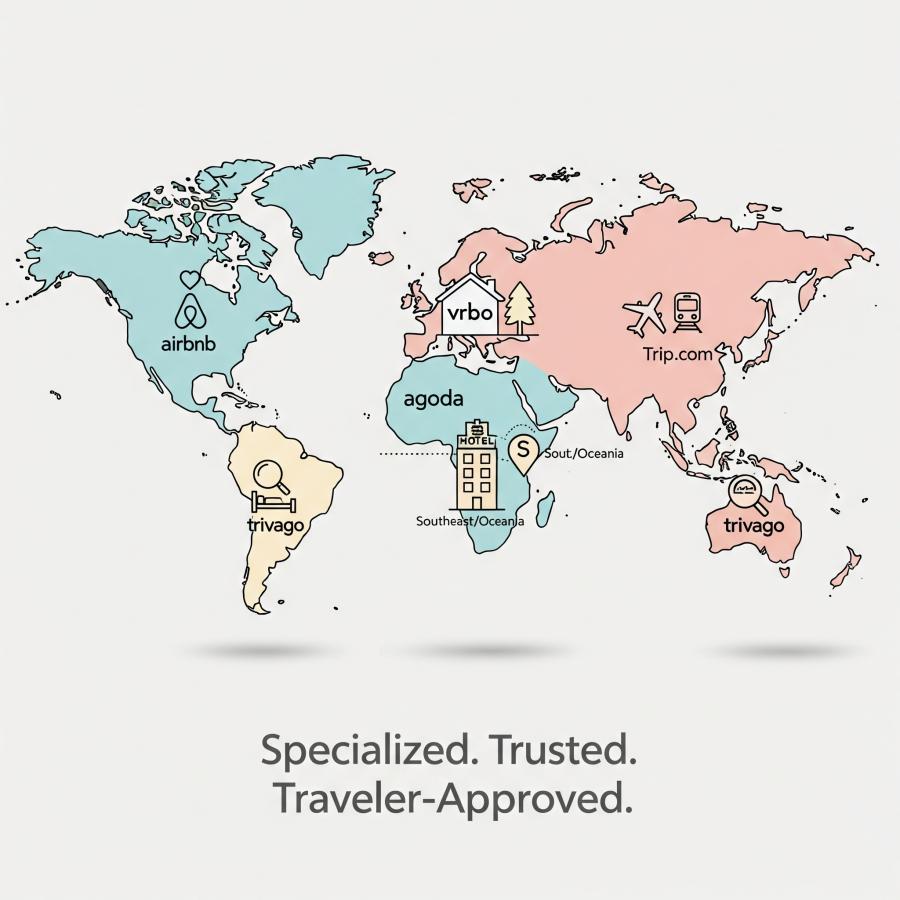
These platforms offer more specialized services or alternative booking models, and they’re all highly regarded within their niches.
Airbnb – Trust Score: 100/100
Known for its unique stays and local experiences, Airbnb is a household name. Just be sure to check reviews and confirm refund policies before booking.
Vrbo – Trust Score: 100/100
Vrbo is ideal for families or group travel. It specializes in whole-home rentals and is backed by the Expedia Group with 24/7 support.
Trip.com – Trust Score: 100/100
This fast-growing global OTA is especially strong in Asia, offering everything from flights and trains to car rentals and tours.
Agoda – Trust Score: 100/100
Great for travelers in Southeast Asia, Agoda frequently offers unbeatable hotel prices. A part of Booking Holdings with broad consumer protections.
Trivago – Trust Score: 100/100
Trivago doesn’t handle bookings directly—it compares hotel prices across other trusted platforms. A powerful tool for budget-conscious travelers.
A Few Quick Tips Before You Book
To further ensure a safe and smooth booking experience in 2025, keep these essential tips in mind:
- Read the fine print: Always check cancellation policies, refund terms, and fees.
- Verify site trustworthiness: Run a quick website trust check before entering your credit card.
- Check official travel advisories: Refer to Travel.State.gov (for U.S. travelers) or your local foreign office.
- Beware of phishing scams: Don’t click suspicious booking links. If in doubt, visit the travel site directly.
- Use credit cards: For better consumer protection, pay with credit rather than debit.
- Confirm directly: After booking through an OTA, contact the hotel or airline to confirm your reservation.
Final Boarding Call
Travel should be exciting—not anxiety-inducing. With so many choices out there, it’s easy to get overwhelmed (or worse, scammed). But these 13 travel websites have built their reputations on being safe, smart, and incredibly user-friendly.
So whether you’re planning a dream vacation or just trying to get the best deal on a business trip, now you’ve got the essential tools to book with confidence—and maybe save a few bucks, too.
📱 Make the Most of ScamAdviser Everywhere You Go
Check websites, numbers, IBANs & wallets in seconds.
Spot red flags before they spot you — install the app now!
✈️ Bon voyage, savvy traveler!
Report a Scam!

Have you fallen for a hoax, bought a fake product? Report the site and warn others!
Scam Categories
Help & Info
Top Safety Picks
Your Go-To Tools for Online Safety
- ScamAdviser App - iOS : Your personal scam detector, on the go! Check website safety, report scams, and get instant alerts. Available on iOS
- ScamAdviser App - Android : Your personal scam detector, on the go! Check website safety, report scams, and get instant alerts. Available on Android.
- NordVPN : NordVPN keeps your connection private and secure whether you are at home, traveling, or streaming from another country. It protects your data, blocks unwanted ads and trackers, and helps you access your paid subscriptions anywhere. Try it Today!
Popular Stories
As the influence of the internet rises, so does the prevalence of online scams. There are fraudsters making all kinds of claims to trap victims online - from fake investment opportunities to online stores - and the internet allows them to operate from any part of the world with anonymity. The ability to spot online scams is an important skill to have as the virtual world is increasingly becoming a part of every facet of our lives. The below tips will help you identify the signs which can indicate that a website could be a scam. Common Sense: Too Good To Be True When looking for goods online, a great deal can be very enticing. A Gucci bag or a new iPhone for half the price? Who wouldn’t want to grab such a deal? Scammers know this too and try to take advantage of the fact. If an online deal looks too good to be true, think twice and double-check things. The easiest way to do this is to simply check out the same product at competing websites (that you trust). If the difference in prices is huge, it might be better to double-check the rest of the website. Check Out the Social Media Links Social media is a core part of ecommerce businesses these days and consumers often expect online shops to have a social media presence. Scammers know this and often insert logos of social media sites on their websites. Scratching beneath the surface often reveals this fu
Disclaimer: This article was originally published in 2018 and has been updated in October 2025 to reflect more current information, resources, and advice. Scams and recovery options continue to evolve, so always double-check with your bank, payment provider, or local consumer protection authority for the latest guidance. So the worst has come to pass - you realise you parted with your money too fast, and the site you used was a scam - what now? Well first of all, don’t despair!! If you think you have been scammed, the first port of call when having an issue is to simply ask for a refund. This is the first and easiest step to determine whether you are dealing with a genuine company or scammers. Sadly, getting your money back from a scammer is not as simple as just asking. If you are indeed dealing with scammers, the procedure (and chance) of getting your money back varies depending on the payment method you used. PayPal Debit card/Credit card Bank transfer Wire transfer Google Pay Bitcoin PayPal Good news: PayPal gives you strong protection. You can file a dispute within 180 days of your purchase. You can get a refund if: Your order never arrives, and the seller cannot provide proof of delivery. The scammer sends you something completely different (e.g., a controller instead of a PlayStation). The product condition was misrepresented (sold as new but arrives used). The item is missing undisclosed parts. The item is counterfeit. Start your claim directly through Pay