
How Many More Must Be Trapped Before the World Stops These Scam Compounds?
Author: Adam Collins
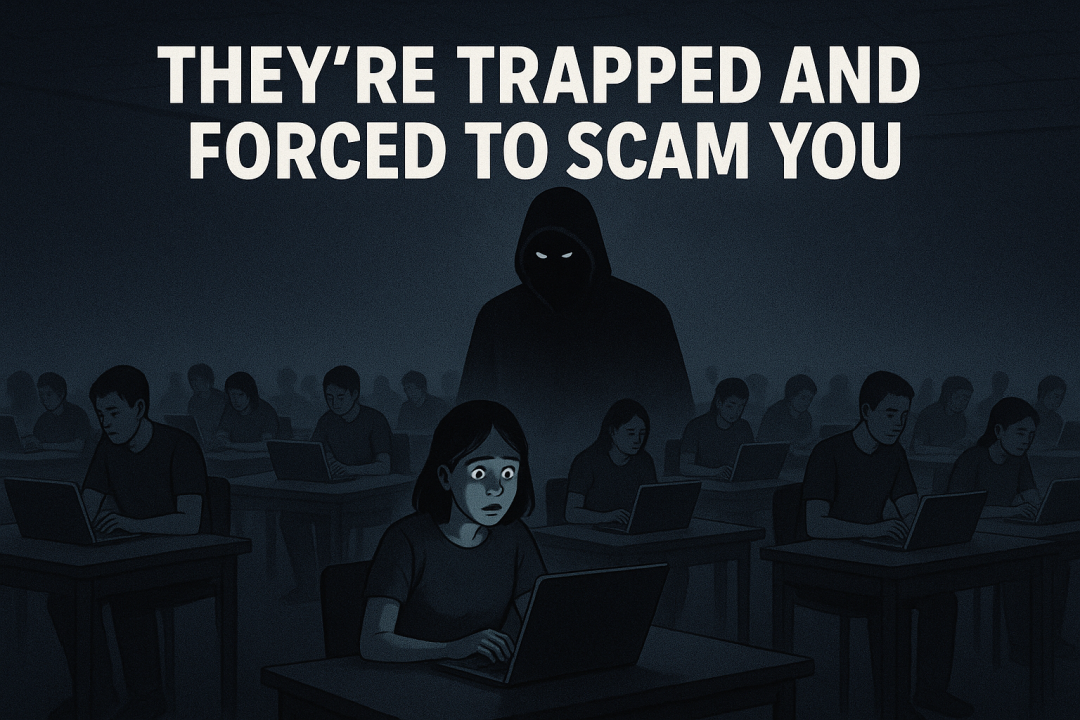
Welcome to the underbelly of the internet’s most profitable criminal empire — scam compounds. Picture this: guarded fortress-like buildings deep in the jungles or borderlands of Myanmar, Cambodia, or Laos. Inside? Not masterminds in suits, but thousands of trapped workers — victims of human trafficking — forced to scam people around the world. This isn’t a movie plot. It’s one of the most disturbing and lucrative criminal operations of our time.
In a nutshell: Scam compounds in Southeast Asia are modern-day cyber sweatshops — trapping over 200,000 people in forced labor to fuel a multi-billion-dollar global scam economy. Victims are trafficked with fake job offers, trained to run romance and crypto scams, and beaten if they fail to meet quotas. The profits rival national economies, while corruption and weak law enforcement keep the machine running.
Here are five things you need to know about how these scam compounds work — and why they matter far beyond Asia.
1. Human Trafficking Disguised as a Job Offer
It all starts with a “dream job” ad. A post promising great pay, a tech role, maybe even relocation perks. But the dream quickly becomes a nightmare.
Once victims arrive, their passports are confiscated, and they’re locked inside heavily guarded compounds. They’re given quotas — scam a certain number of people each day — or face beatings, electric shocks, starvation, or worse.
According to the UN Human Rights Office, around 120,000 people in Myanmar and 100,000 in Cambodia are trapped in these cyber-slavery hubs. The victims aren’t just from one place either — they’re from China, Thailand, the Philippines, India, Malaysia, and even parts of Africa and Latin America.
2. Fraud on an Industrial Scale
These aren’t one-person phishing operations — they’re scam factories. Think call centers, but instead of customer service, the “employees” are forced to run romance scams, fake crypto investments, and loan schemes.
The most infamous? The “pig butchering” scam — a long-term con where victims are groomed into fake relationships before being tricked into investing. The average loss per person? A staggering $160,000.
Researchers estimate these operations bring in tens of billions of dollars every year. One report pegged the annual theft from the Mekong region at over $43.8 billion — enough to make even major tech CEOs blush.
3. Crime Thrives Where Law Doesn’t
You’ll find these compounds tucked away in special economic zones and lawless borderlands — places where governments have little control and corruption runs deep.
Myanmar, Cambodia, and Laos have become prime locations, where powerful transnational syndicates, often with Chinese and Taiwanese criminal roots, operate with near impunity.
A U.S. government estimate revealed Americans alone lost over $10 billion to scams tied to Southeast Asia in 2024. Local authorities often look the other way — or worse, are reportedly in on the take.
4. The Money Trail is Global
The financial side of this story is just as jaw-dropping. The scam industry’s profits are laundered across borders, moving through crypto wallets, shell companies, and fake trade networks to hide their tracks.
In Cambodia, for instance, these scams generated $12.5 billion in 2023 — nearly half the country’s official GDP. That’s not a typo. The dirty money doesn’t just enrich gang leaders — it fuels organized crime, corruption, and political instability across the region.
5. The Victims Are Everywhere
The tragedy of scam compounds is twofold: those trapped inside, and those being scammed on the outside.
The workers are often trafficked from poorer nations, but the online victims — the people losing their life savings — are usually from wealthier countries like the U.S., the U.K., and across Europe. This isn’t just a regional crime; it’s a global catastrophe with human faces on both sides of the screen.
The Bottom Line: Stay in the Know
Scam compounds are no longer a regional issue — they’re a transnational human rights and financial crisis. Each fake romance, crypto scam, or phishing message could be the work of someone enslaved thousands of miles away.
Governments and law enforcement agencies are finally catching up, but until there’s real international pressure — and accountability for those enabling this system — the scam factories will keep running, and the victims (on both ends) will keep paying the price.
At ScamAdviser, we’re shining a light on the dark corners of the internet — exposing the networks, tactics, and enablers behind global scams so you can stay informed, stay alert, and stay safe.
Download the ScamAdviser App to instantly check if a website looks suspicious and help stop scammers from profiting off human misery.
Report a Scam!

Have you fallen for a hoax, bought a fake product? Report the site and warn others!
Scam Categories
Help & Info
Top Safety Picks
Your Go-To Tools for Online Safety
- ScamAdviser App - iOS : Your personal scam detector, on the go! Check website safety, report scams, and get instant alerts. Available on iOS
- ScamAdviser App - Android : Your personal scam detector, on the go! Check website safety, report scams, and get instant alerts. Available on Android.
- NordVPN : NordVPN keeps your connection private and secure whether you are at home, traveling, or streaming from another country. It protects your data, blocks unwanted ads and trackers, and helps you access your paid subscriptions anywhere. Try it Today!
Popular Stories
As the influence of the internet rises, so does the prevalence of online scams. There are fraudsters making all kinds of claims to trap victims online - from fake investment opportunities to online stores - and the internet allows them to operate from any part of the world with anonymity. The ability to spot online scams is an important skill to have as the virtual world is increasingly becoming a part of every facet of our lives. The below tips will help you identify the signs which can indicate that a website could be a scam. Common Sense: Too Good To Be True When looking for goods online, a great deal can be very enticing. A Gucci bag or a new iPhone for half the price? Who wouldn’t want to grab such a deal? Scammers know this too and try to take advantage of the fact. If an online deal looks too good to be true, think twice and double-check things. The easiest way to do this is to simply check out the same product at competing websites (that you trust). If the difference in prices is huge, it might be better to double-check the rest of the website. Check Out the Social Media Links Social media is a core part of ecommerce businesses these days and consumers often expect online shops to have a social media presence. Scammers know this and often insert logos of social media sites on their websites. Scratching beneath the surface often reveals this fu
Disclaimer: This article was originally published in 2018 and has been updated in October 2025 to reflect more current information, resources, and advice. Scams and recovery options continue to evolve, so always double-check with your bank, payment provider, or local consumer protection authority for the latest guidance. So the worst has come to pass - you realise you parted with your money too fast, and the site you used was a scam - what now? Well first of all, don’t despair!! If you think you have been scammed, the first port of call when having an issue is to simply ask for a refund. This is the first and easiest step to determine whether you are dealing with a genuine company or scammers. Sadly, getting your money back from a scammer is not as simple as just asking. If you are indeed dealing with scammers, the procedure (and chance) of getting your money back varies depending on the payment method you used. PayPal Debit card/Credit card Bank transfer Wire transfer Google Pay Bitcoin PayPal Good news: PayPal gives you strong protection. You can file a dispute within 180 days of your purchase. You can get a refund if: Your order never arrives, and the seller cannot provide proof of delivery. The scammer sends you something completely different (e.g., a controller instead of a PlayStation). The product condition was misrepresented (sold as new but arrives used). The item is missing undisclosed parts. The item is counterfeit. Start your claim directly through Pay